HNPNC members took the final meeting of the 2013-2014 season outdoors on Tuesday evening (June 10th) with a walk through Scotsdale Farm. While we were there we checked several of the nest boxes that we installed on May 19th.
To our delight we found that 50% of the nest boxes were occupied even though we put them up a bit late for the nesting season. Most of the occupants were Tree Swallows but one box appeared to have been claimed first by an Eastern Bluebird and then taken over by a House Wren.
Thanks again to Kim Dobson for making the boxes and overseeing the installation. Thanks also to the hardy members of the Halton/North Peel Naturalist Club and our guests from Friends of Scotsdale Farm, who braved hungry mosquitoes for a walk through this beautiful property on a lovely June evening.
Guided Monday evening walks will continue throughout the summer in partnership with the South Peel Naturalist Club. HNPNC’s next official meeting will be September 9th at Saint Alban’s in Glen Williams – mark your calendars!
Left to right: Jeff Cassidy, Emily Dobson, Bill McIlveen, Ramona Dobson, Ian Jarvie, Fiona Reid, Sandy Gillians, Kim Dobson.
Several members of the Halton/North Peel Naturalist Club met this morning to install bird boxes around the hay meadows and old fields of Scotsdale Farm in Halton Hills. The fields are home to Eastern Bluebirds, several species of swallows, and threatened grassland birds such as Bobolink and Eastern Meadowlark.
Several more boxes were installed on the grounds of St. Alban’s church along the Credit River in Glen Williams last week.
HNPNC raised funds for the bird boxes through donations from attendees of a reptile workshop held January 12th this year. Many thanks to HNPNC member Emily Dobson (who is also Ontario SwiftWatch Coordinator for Halton) for moving this project forward, and to Kim Dobson for building the boxes and supervising the installations.
Hello all, spring is finally here! What a welcome sight it is too. What a joy to see the subtle shades of green unfurling leaves taking over from endless grays of winter. It will be interesting to watch the forest slowly recover from the ice storm. Some trees won’t make it, but the extra light will bring on fast growth from others.
Migrant birds are now here and it is a wonderful time to get out and see them. City parks are especially rich in birds looking to refuel as they pass through an expanse of concrete. I saw this for myself yesterday in Centennial Park, when I had an hour to kill on Toronto and tallied 10 species of warbler in full spring regalia! Ray’s trip to Whitby next weekend will hit some birding hotspots and see many more species of songbird and water birds.
I hope you can all get out and enjoy the good weather – we deserve it!
The chimney swift is a pretty remarkable species of bird when you consider its rapid adaptation over the last century. Historically, these birds inhabited old growth forests, using cavity trees or snags (standing dead trees) with large hollows for roosting and nesting. However, the European settlement and logging practises occurring into the 1900s saw the destruction of forests across North America, and with it, the loss of vital habitat for many animals including chimney swifts.
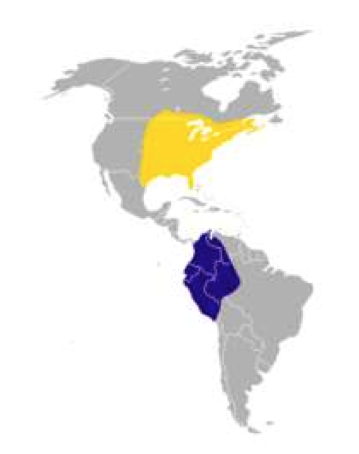
Figure 1. Chimney Swift range map, with wintering habitat in South America, and summer habitat in eastern North America. Source: “Chimney Swift range” by America_Federal_Provincial_y_Departamental is licensed under CC BY 3.0
As forests were rapidly disappearing, they were being replaced by farmland, barns, churches and houses heated using woodstoves. Conveniently, the swifts would migrate back from the Amazon basin in South America to eastern North America in late April through mid-May (Figure 1). By this time, the chimneys in these structures were no longer being used, providing artificial habitat for the aptly named birds to settle at night- time and to nest in.
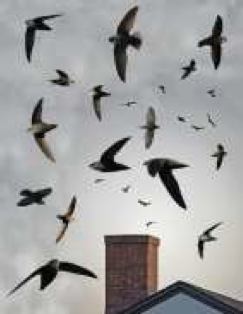
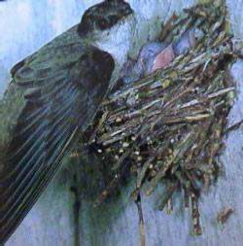
The reason the chimney has served as a good alternate habitat for swifts is because of both its size and texture. The size of the chimney must be large enough for many birds, as they roost in groups that may be as large as thousands of individuals (Figure 2). This group strategy is beneficial as it provides protection (i.e. from predators) and allows the birds to maintain their body temperature during cool nights. Chimneys with brick interiors create rough vertical surfaces that allows these birds to rest against with a “fork” on their tail. Additionally, nesting birds will use chimneys for breeding, using their glue- like saliva to create half-cup nests within the chimney, with one pair of birds per structure (Figure 3).
Figure 2. Chimney swifts circling a chimney before funneling in and roosting for the night. Source: “Chimney Swift From The Crossley ID Guide Eastern Birds” by America_Federal_Provincial_y_Departamental is licensed under CC BY 3.0
Despite their rapid adaptation to man-made structures, the Canadian population of chimney swifts has drastically declined by 95% since 1968 (COSEWIC 2007). There are several explanations that may, together, contribute to these significant declines.
For starters, over the last 50 years, North Americans have further developed their heating systems, and instead of using woodstoves with chimneys, gas fireplaces or central heat are instead the norm. New buildings are no longer being built with chimneys, and buildings that have unused chimneys are being capped, lined or removed, to dissuade other creatures, like raccoons from wreaking havoc and making noise. Combined with deforestation, habitat is becoming more limited.
Figure 3. Chimney swift nest. Source: “ChimneySwift23” by United States National Park Service, Isle Royale National Park
Mortality along their migration route may also be a factor. Significant declines are caused when hurricanes occur during migration, forcing them to re-route, or reducing food sources essential to their survival. If climate change increases the frequency of storm events, declines may continue, further reducing population sizes.
Changes in food supply may be impacting survivorship of chimney swifts. These birds are aerial insectivores, meaning they catch their prey while flying. They are in flight almost continuously throughout the day, causing them to expend a large amount of energy. Therefore, if food availability is low it can greatly impact their survival.
So what are we doing to help? Well for starters, the chimney swift is listed as “threatened” under the Endangered Species Act. Species with a threatened status receive habitat protection, and for the chimney swift, this means any repairs, modifications, maintenance, replacement or demolitions to chimneys that are suitable for habitat require certain conditions, including the following:
The work must be registered with the Ministry of Natural Resources prior to commencement.
Disturbance to the species must be minimized.
Often, new habitat must be created and maintained for chimney swifts.
Records of ongoing monitoring of the created habitat must be kept and reported.
Bird Studies Canada is conducting a long-term monitoring program, called SwiftWatch, with the goal of continuing to monitor known roosts, to find new roosts, and to raise awareness about this species at risk. The 2014 National Roost Monitoring Program is a continent-wide effort to study this species, and will be taking place May 21, 25, 29 and June 2. If you are interested in volunteering with the Halton SwiftWatch Program, or would like to know more, please use the contact form with the subject line, “Emily Dobson – SwiftWatch”.
References
Committee on the Status of Endangered Wildlife in Canada (COSEWIC). 2007. Chimney Swift.
Credit Valley Conservation award winners celebrate with a smile. (From left) CVC CAO Deborah Martin-Downs, Mississauga Volunteer Pat Kelly, MPP Dipika Damerla, Acton volunteer Bill McIlveen and CVC Volunteer Program Coordinator Annabel Krupp.
More than six million Ontarians contribute to their communities through volunteerism each year. In recognition of this, the Ontario Ministry of Citizenship and Immigration held a Volunteer Service Awards ceremony on April 29. The event celebrated the dedicated service of volunteers in the western GTA.
Credit Valley Conservation (CVC) nominated three volunteers for their outstanding contributions to the local environment. Mississauga’s Pat Kelly and Jean Williams along with Acton’s Bill McIlveen received awards for 10, 40 and 20 years of service respectively. Award recipients were presented with a commemorative pin and personalized certificate acknowledging their years of service.
“Volunteers serve such an important purpose at CVC and their support allows us to perform much-needed work in the community,” said Annabel Krupp, Volunteer Program Coordinator at CVC. “The ceremony showed that volunteer efforts do not go unnoticed.”
The ceremony, held at the Mississauga Convention Centre, was attended by hundreds, including MPP Dipika Dimerla and CVC CAO Deborah Martin-Downs.
The Ontario Volunteer Service Awards recognizes youth with over two years of continuous volunteer service and adults with over five years of continuous service. Nominees must be active participants in the organization and must not receive payment for their services.
Conservation Authorities are a provincial/municipal partnership. CVC was established by an Act of the Province of Ontario in 1954 with a mandate to protect all natural resources, other than minerals, in the area drained by the Credit River. We have been working for 60 years with our partner municipalities and stakeholders to protect and enhance the natural environment of the Credit River watershed for present and future generations. CVC is a member of Conservation Ontario.
Behold the wood frog, an evolutionary masterwork. A soft bodied amphibian that survives the fury of Canadian winters as far north as Old Crow in the Yukon. In that cruelest of seasons, wood frogs lie quiescent in beds of leaves, biding time until snowmelt softens their stiff bodies. They protect their delicate cellular machinery by shunting water out of their cells to freeze benignly in the spaces surrounding those cells. And as if that metabolic alchemy isn’t remarkable enough, wood frog cells become infused with glucose – enough, milligram for milligram, to kill a human many times over. For the wood frog though, this sweet syrup becomes a life-saving antifreeze.
Wood frogs are aptly named for they are utterly dependent on woodlands for survival. Essential, too, are ponds for breeding. Usually wood frogs choose ponds that hold water only temporarily – a roll of the dice that can lead to the death or salvation of their progeny. The absence of tadpole-chomping fish in a temporary pond explains the gamble. But, if the pond dries early, mass tadpole-cide will result. The prospect of drying ponds and limited life spans, force a particular urgency on wood frog sex. Of 52 weeks in the year they have but two or three available for reproduction in earliest spring. Moreover, wood frogs may have only one or two of these brief sexual opportunities before they end up in the gullet of a frog-hungry predator.
No wonder then, that a wood frog pond in April is a frenzy of activity. Males beckon females with quacking voices. They battle rivals – scrambling atop them and pushing them under water. Multiple males pursue lone females, in desperate attempts to couple. The mated females lay hundreds of black eggs that soon yield wriggling tadpoles.
The frenzied mating of the marvellously adapted wood frog has persisted for tens of thousands of years. Given woods and water, it should continue for thousands more.
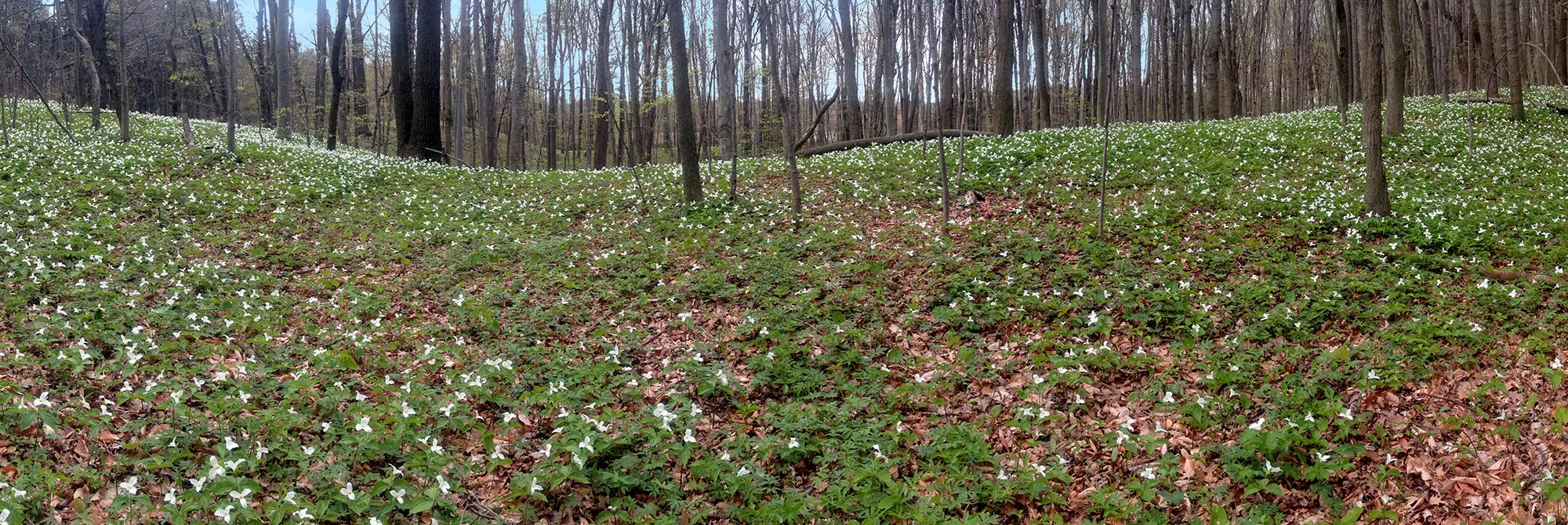
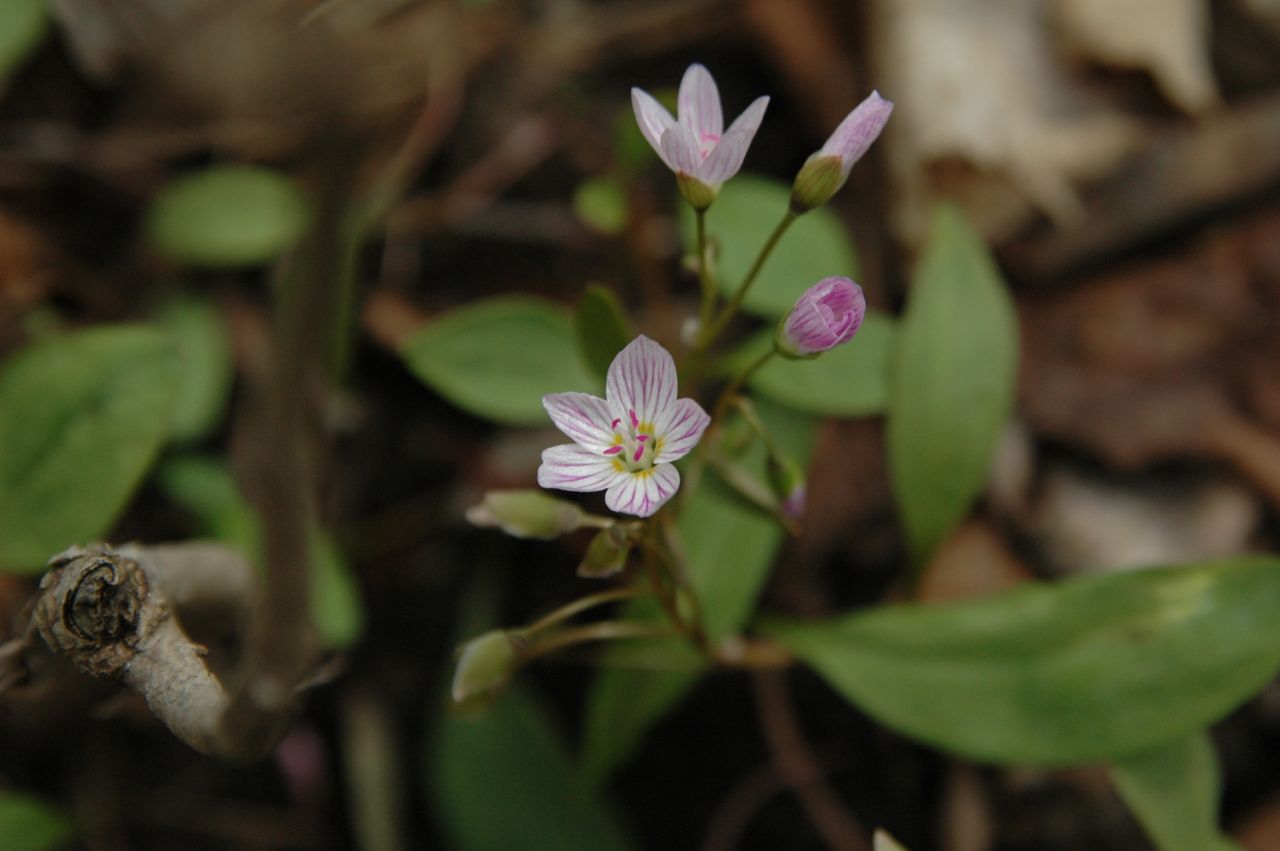
It’s a wonderful time to get out into the woods around Halton Hills. The spring ephemerals are in full bloom and putting on a beautiful show after a long, hard winter.
Chimney swifts are beginning to arrive in Ontario for the breeding season after a long journey back from the Amazon basin. These iconic birds have declined by an alarming 30% in the past 14 years, and the Halton/North Peel Naturalist Club is seeking dedicated volunteers to join us in the Bird Studies Canada SwiftWatch Program. Our goals for the 2014 season are to continue monitoring known roosts, to find new roosts, and to raise awareness about this threatened species at risk.
The 2014 National Roost Monitoring Program is a continent-wide effort to study Chimney Swifts on May 21, 25, 29 and June 2. Our club will also host a Swift Night Out (date and place to be announced), where the public is invited to join us in observing the beauty of swifts gathering to roost in the evening.
If you are interested in volunteering with our Halton SwiftWatch Program or would like to know more, please contact Emily Dobson (put “SwiftWatch” in the subject line). To report sightings, please record your observations using the Online Data Form, available on the Bird Studies Canada website.
Check out this amazing video of chimney swifts in action:
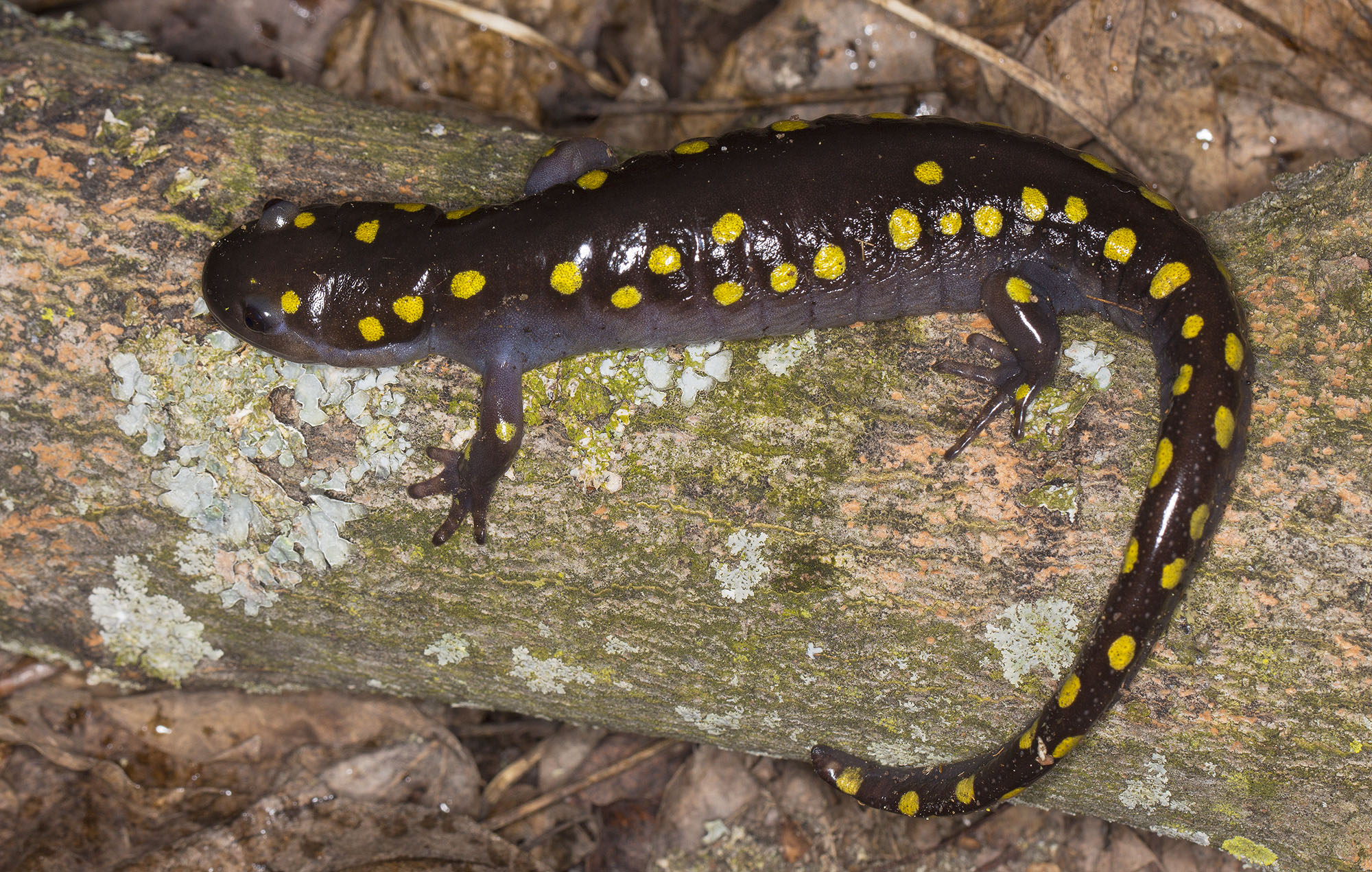
In spite of fluctuating temperatures, salamanders are on the move! Club members had to watch their step when they visited a vernal pond at Silver Creek Conservation Area last weekend. Salamanders were active and thick on the ground, ignoring low temperatures to conduct their annual nocturnal “spring thing”. Jefferson Salamanders (a threatened species) and Spotted Salamanders were numerous on the forest floor, and a single red-backed salamander was observed out for a nocturnal stroll; a bizarre leucistic (partially pigmented) spotted salamander was also sighted.
serving Brampton, Georgetown, Milton, Acton, Caledon & surrounding areas
Meetings are held at St Alban the Martyr Anglican Church
537 Main St,.
Glen Williams
On L7G 3T1